
The Used Excavator Business: Hard to Do, Hard to Kill
Low barriers, thin margins, endless pitfalls — so why have some people lasted twenty years in used excavators? Here is what makes this trade hard, and what keeps it alive.
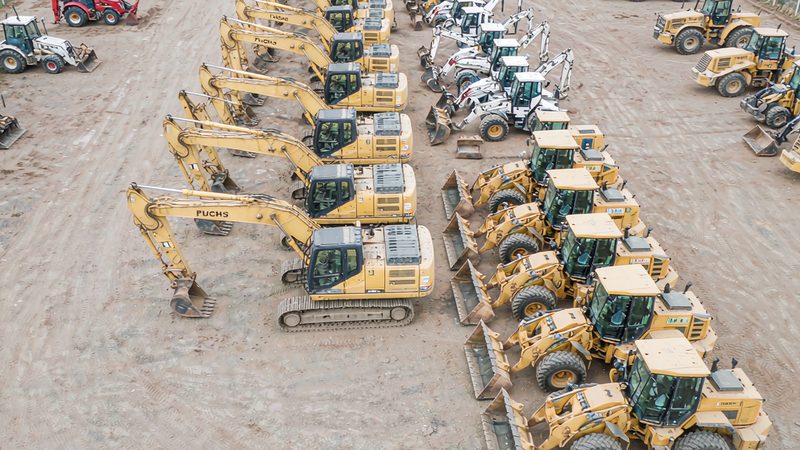
People keep asking me: is the used excavator business still worth doing?
I tell them: yes, you can do it, but it isn't easy. This trade has two traits: it's hard to do, and it's hard to kill.
First, why it's hard
Hard part one: no standard
New machines follow one standard. Same model, same unit off the line.
Used machines don't. Two machines of the same model and year — one worked six years in a quarry, the other six years on municipal jobs — and their condition can differ twofold.
No standard means no easy pricing. When we price a machine, we weigh the year, the hours, the working conditions, the repair history, the brand, local demand, the exchange rate, the shipping schedule — at least eight variables.
Of those eight, at least four are uncertain.
So this trade has no standard price, only estimates. Estimates can be wrong, and wrong costs money.
Hard part two: the information gap is flipping
Ten years ago, sellers knew more than buyers and made money off that gap.
Now it's reversed. Buyers can find more and more information, and buyers talk to each other.
We have a customer group in East Africa with over four hundred members, all buyers. If someone's machine has a problem, one photo goes up and everyone knows.
Once information flips, making money by hiding things kills you the first time you try.
Hard part three: capital lock-up
A twenty-ton excavator costs 300,000 to 500,000 yuan to buy in.
Twenty units in stock is six to ten million.
Those millions sit in the yard, burning financing costs every day, plus yard fees and insurance.
One extra month of slow turnover and the profit is gone.
We've run the numbers: days of inventory turnover is the most important metric in this trade — more important than gross margin.
Hard part four: after-sales is a bottomless pit
Machine sold. It breaks. Do you take care of it or not?
Don't, and you lose the customer — and they tell everyone.
Do, and the cost is uncontrollable. You make 30,000 on a sale; one repair can cost 20,000.
Before 2019 our policy was fix whatever we can. After-sales ate 34 percent of our gross profit.
Later we set a rule: define the responsibility boundaries and write them into the contract. Problems rooted in the machine's own condition are fully on us, parts and freight included. Problems from misuse — we supply parts and technical support, and the customer covers the cost.
Once the rule was clear, after-sales cost dropped to 19 percent, and customer satisfaction actually went up.
Now, why it's hard to kill
Why the trade won't die
First, demand is rigid.
Infrastructure and mining in Africa, Southeast Asia, and South America need huge numbers of machines. New equipment is too expensive — a new twenty-ton excavator runs over 1.2 million yuan; a used one of the same class is 300,000 to 500,000.
For local small and mid-size contractors, used isn't a choice — it's the only option they can afford.
As long as building goes on, the demand is there.
Second, supply keeps coming.
China's domestic fleet of construction equipment is enormous, and every year large numbers of machines cycle out. Those machines don't disappear; they flow to where they're needed.
Third, capability is a moat.
The real moat in this trade isn't sourcing machines — it's judging their condition.
Judging whether a machine is good takes experience. It takes us two years to train a qualified inspector.
Those two years can't be bought with money.
Fourth, service accumulates.
Parts inventory, overseas locations, customer relationships — all built with time.
A newcomer with money can buy machines, but can't buy five years of customer trust.
Who dies
The ones I've seen die fall into three types.
Type one: speculators. They jump in when the market is hot, stockpile machines, and when prices drop their cash chain snaps. In 2021 and 2022, I personally knew six companies that went down this way.
Type two: those who don't inspect. They don't look when buying, or they look and can't see. Machines go out, problems erupt, claims crush them. These die the fastest.
Type three: those who do everything. Excavators today, clothing tomorrow, solar the day after. No depth in any category, no profit in any of them.
We nearly died on type three ourselves. In 2022 we ran six categories at once, and we lost money that year.
Who survives
The peers I've seen doing well share a few traits.
One, narrow categories. One or two categories, done to the bone.
Two, ruthless inspection. Better to pass on ten machines than buy one wrong.
Three, fast inventory. No stockpiling; turnover under thirty days.
Four, quick to own mistakes. When a problem comes up, don't blame the customer — pay first, investigate after.
Five, clean books. Gross margin in this trade looks high, but net is thin. If you don't track every freight charge, storage fee, and document amendment fee, the money leaks away.
How long can we last
I don't know.
I only know this trade won't vanish because of e-commerce or platforms, because it sells non-standard goods that need human judgment.
Human judgment can't be replaced in the short run.
Will that day come? Maybe. When it does, those of us who make a living inspecting machines will have to find a new road.
Until then, we inspect the machines right and tell the truth.