
Our First English Contract Went Through Eleven Drafts
A $270,000 deal, eleven drafts of the contract, six weeks of talks. Payment terms alone took four drafts; governing law deadlocked for two days. Legal fees came to 22,000 yuan — but that master template is still in use today.
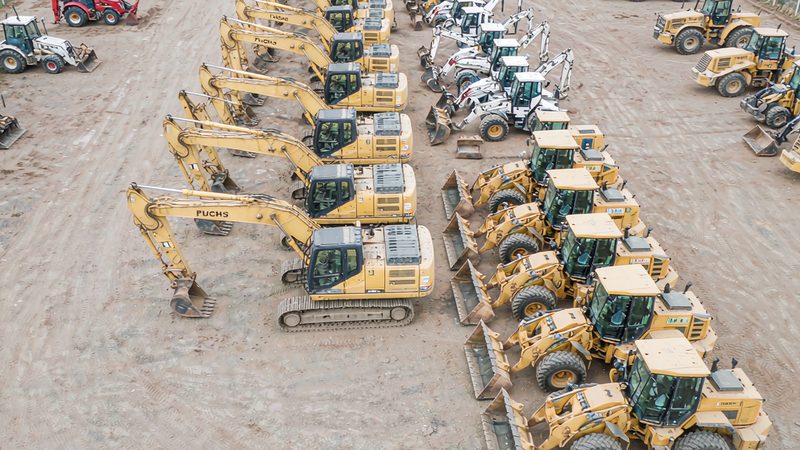
In March 2016, we signed our first all-English contract. The customer was from Ghana: two wheel loaders plus a road roller, $270,000 of goods.
Our previous contracts were all bilingual, with the Chinese version controlling. This time the customer said plainly: English only. Their lawyer only reads English.
We'd met this customer at the Canton Fair — Zhou Li took his card. The deal had been negotiated for four months, and at the very last step it got stuck on the contract.
From first draft to signature, the contract went through eleven drafts over six weeks. This article is about what those eleven drafts changed.
The translator we hired first was the wrong one
For the first draft we used a translation company to render our Chinese contract into English. Delivered in three days, two thousand yuan.
The translation read smoothly — even I enjoyed reading it. But the customer's lawyer came back with seventeen comments. Take the phrase "quality problem": their side said it couldn't be used without a precise definition. What counts as a quality problem? Who gets to decide?
That's when I understood: a contract is not a language problem, it's a rules problem. A translator's job is fidelity and elegance; a lawyer's job is winning in court. We needed the latter.
We switched to a lawyer who handles cross-border work — five thousand per draft. That money was far better spent than the translation. The translation company did nothing wrong; the mistake was mine, assuming contract translation and ordinary translation were the same thing.
What did the eleven drafts change? Roughly: draft one was language; drafts two through five were payment; draft six was inspection standards; draft seven was the delivery schedule; draft eight was claims; draft nine was force majeure; draft ten was governing law; draft eleven was signature formalities.
Payment terms took four drafts
We proposed thirty percent down, seventy percent against the copy of the bill of lading. The customer wanted to pay the balance only after the goods arrived at port and passed inspection.
His reasoning held up: he'd been cheated before — paid in full and received a pile of scrap. My reasoning held up too: if the goods arrive and he refuses them, shipping them back costs more than the goods are worth.
While we were arguing this clause, their purchasing manager wrote in an email: we've been cheated by Chinese people before. I replied: we've received bounced checks too. Neither of us owes the other anything — let the clauses talk.
Drafts two through five were all about this one clause. Each side gave a step: thirty percent down, fifty percent against the bill of lading copy, twenty percent within seven days after arrival inspection.
For the post-inspection twenty percent, we added one sentence: inspection standards follow the machine inspection report format in the contract appendix, and the customer may not invoke any other standard.
That sentence later saved us. Another customer tried to withhold payment by citing local standards; we sent him the contract appendix and he accepted it.
Claims period and force majeure
On the claims period, the customer wanted six months; we only dared offer thirty days. With used equipment, you can't tell who caused a problem six months later — a bad operator can wreck a good machine.
Draft eight settled on forty-five days from the arrival date. Forty-five days was the limit of what we could verify: forty days of sea freight, seven days of arrival inspection, immediate reporting if something went wrong — the timing just worked.
We also added a clause: wear parts are excluded from claims, with a list in the appendix — filters, belts, hoses, bulbs, all in there.
For force majeure, the version their lawyer wrote included changes in market conditions. We deleted it. A change in the market isn't force majeure — it's breach of contract. Their lawyer smiled at that one and didn't fight it.
Governing law: whose home turf
They wanted Ghanaian law; we wanted Chinese law. Two days of talking, deadlock.
The deadlock had one cause: everyone fears a law they can't read.
Draft ten settled it: English law governs, disputes arbitrated in Hong Kong.
The logic is simple: whoever knows the law has the advantage. English law, which neither side knows, is actually fair.
The lawyer told us that cross-border litigation isn't about right and wrong — it's about cost. Choosing a venue where both sides can afford to fight matters more than choosing a law you know. We'd asked around about the cost and speed of Hong Kong arbitration; we could live with it.
What survived the eleven drafts
The signed version kept several things we'd insisted on throughout: the deposit is non-refundable but can roll over to the next shipment; inspection standards follow the appendix; claims within forty-five days; wear parts excluded; Hong Kong arbitration.
Of the eleven drafts, we conceded seven and defended four. What we conceded was wording; what we defended was the bottom line.
The deal was executed smoothly. The final twenty percent arrived on the fifth day after port arrival — two days earlier than agreed.
We signed on April 21. Their lawyer wrote in an email: this is the most heavily revised used equipment contract I've ever seen. I took it as a compliment.
Legal fees totaled 22,000 yuan — less than 0.12 percent of a $270,000 deal. A colleague said it was expensive. I said: this is the master template for every English contract from now on. Spread across every future deal, it's not expensive at all.
The template lives on my computer. The file name is literally "English Contract V11." Every new deal starts from a save-as of that file.
Over six weeks we exchanged more than forty emails. I archived every draft, numbered by date. Looking back now, the first draft was truly unsignable. Back then I didn't know better — I thought a contract was just a signature.
Every English contract since has been revised from this template. The clauses are the same clauses — but now we know which draft each one was won in, and why it can't be given away.