
A Customer Brought His Whole Family to See the Machines — We Added an Extra Chair
Kwame, a Ghanaian customer, flew 11,000 kilometers to Panyu with his wife and two kids to see machines. We were short on chairs, so Lao Wang brought a folding chair with a crooked leg. His wife asked questions from a notebook for two hours. In the end they took all three machines — 940,000 yuan of goods.
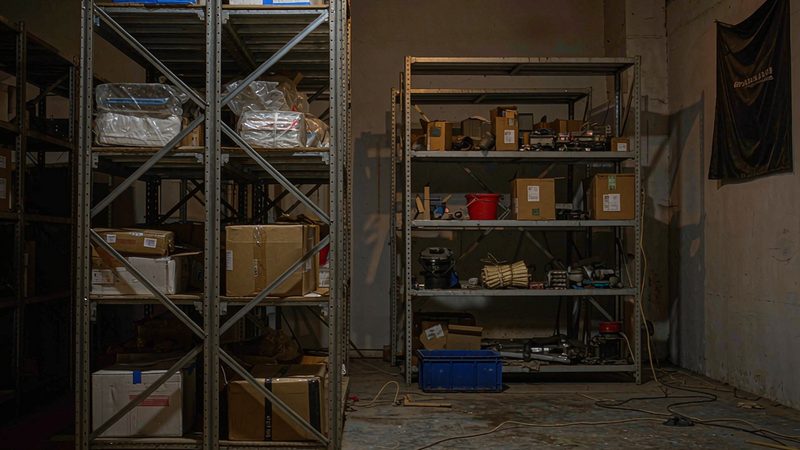
November 16, 2017, a Thursday. Guangzhou was still in T-shirt weather. At ten in the morning the front desk called the warehouse: a Black customer had arrived — not alone, a family of four.
The customer was Kwame, Ghanaian, doing earthworks in Accra. We'd emailed for two months; he was coming to Guangzhou to see two Komatsu 200s and an SDLG wheel loader. He never once mentioned family in the emails.
They'd connected through Hong Kong and landed at Baiyun Airport at seven in the morning, then rented a car over. The son had fallen asleep in the car and was still groggy getting out.
Extra chairs in the warehouse
The warehouse office had four chairs: mine, one for the merchandiser, two for guests. A family of four didn't fit.
Lao Wang carried over two folding chairs from the loading dock — one had a crooked leg and needed a piece of cardboard wedged under it. Kwame's daughter was five, his son eight; they couldn't sit still and circled the office.
I sent Xiao Chen to the fruit shop by the gate for bananas, oranges, and two boxes of strawberries — forty-two yuan — plus four bottles of orange juice. The girl spilled juice on the concrete floor and her mother was embarrassed. I said don't worry, forklifts drive over this floor all day.
We washed both boxes of strawberries; the girl ate most of a box by herself. Her mother said strawberries are expensive in Accra and they rarely buy them for the kids.
The son had no interest in the office. He pressed against the window counting machines in the yard one by one. When he got to the wheel loader he asked his mother whether he could sit in it.
Why he brought the whole family
Once we sat down I asked Kwame why he'd brought everyone — four airfares from Ghana isn't cheap.
He said something I still remember. He said: where we're from, buying equipment is the whole family's business. If the machine earns, the whole family eats; if the machine fails, the whole family carries the debt. His wife keeps the books, and the children should know what their father is buying abroad.
His wife opened a notebook and started asking from page one. How many hours on this machine's meter? If it breaks, where do parts ship from? How many days by sea? Is there anyone to receive it at the port? Every question went into the notebook, and she only asked the next one after writing the last one down.
Later I learned their previous machine had been bought from Dubai — paid for based on photos. The paint gleamed in the photos; when it arrived at port, the cab floor was rusted through, and the seller's phone never connected again. That loss was $23,000, and the family spent a year paying it off.
So this time his wife said: no photos. Look at the people, look at the warehouse, look at whether there's stock on the parts shelves.
Three hours of inspection
After the office, the machines. The two Komatsu 200s were parked in a row. I started them up — ten cycles each of boom and arm, ten swings left and right. Kwame climbed into the cab himself and repeated the whole routine.
His son stood on the track shoe and refused to come down, saying he'd drive one of these when he grew up. Kwame laughed: study hard and Daddy will buy you a new one.
His wife also climbed into the cab and sat for five minutes, then wrote a line in her notebook. Later I learned what she wrote: the torn spot on the seat was taped up — the seller didn't lie, this really is a used machine.
For the loader we tested lift and brakes. Lao Wang raised the bucket and dropped it; the hydraulics sounded clean. Kwame lay under the machine for ten minutes and came out with his shirt covered in dust.
His wife recorded every machine's serial number in the notebook and photographed the nameplates and hour meters with her phone.
Lunch was at the Hunan restaurant next to the warehouse — six dishes, 186 yuan. The kids couldn't eat spicy food, so the owner added two steamed egg custards, free of charge.
At the table Kwame asked one question: if the machines arrive and something's broken, will you take care of it? I said yes. Small faults: we air-ship parts and pay the freight. Big faults: if video proves our inspection missed it, we compensate. His wife wrote that down too.
He took all three
At three in the afternoon Kwame said: all three. Two Komatsu 200s and one SDLG 953 wheel loader — 940,000 yuan of goods. His wife wrote the total on the notebook's last page, stared at it for a long time, then nodded.
Payment terms took an hour. His wife insisted on thirty percent down, balance against the bill of lading copy. I said fine — that's how we always do it, and it goes into the contract.
After signing, she said one more thing: we traveled 11,000 kilometers to see whether you really have a warehouse and real people. The chairs are crooked, but the machines are real.
The three machines sailed on December 9 and reached Tema in January. Kwame filmed the arrival — his son waving in front of the excavator.
Before flying home, the family bought gifts at the airport duty-free. Kwame messaged me that his daughter kept the strawberry photos on her tablet, saying Guangzhou fruit was delicious.
Of those two chairs, one got repaired and is still in use. The crooked-legged one I never threw out — it sits in the office corner. When guests come and chairs run short, it's still the one that steps up.
Later, Kwame referred two fellow villagers to us, both contractors from his hometown. His email said only one line: their chairs are crooked, but their books are straight.
In this trade, what a customer comes to see isn't the machine — it's who stands behind it. If his whole family comes, you let the whole family see everything clearly.